

RUSSIAN SOCIAL SURVEY (RSS) ON ESS SPECIFICATION AND PROGRAM
ABOUT PROJECT
Russian social survey (RSS) is the academic project aimed to collect time-series cross-national data on attitudes, opinions, values and behavior. The survey is comparable with European Social Survey (ESS) which includes 30 countries of “Larger Europe”.
The data is collected once in two-three years from the national sample of the population of 15 years old and over by face-to-face interviews in respondent’s homes. The survey is designed and implemented on most advanced and rigorous methodological standards. It is supplemented by methodological experiments and testing new methods and approaches of collecting reliable social survey data which can be used for academic sociological analysis, defining social policies and strategies, and it also makes input in increasing general knowledge about the progress of the society.
RSS started in 2006 (3td round of ESS). Since then, nine rounds of the survey were implemented and released. РСИ проводится с 2006 года (3 волна ESS). С этого времени реализованы девять волн проекта. На сегодняшний день доступны для анализа данные девяти волн– 2006, 2008, 2010, 2012, 2014, 2016, 2018, 2021 и 2024.
The next round of RSS is planned for year 2026.
Main goals
-
Study change in social, economic and political life of Russia over time in comparison with other countries
-
Regular measure of key indicators of social progress – attitudes, opinions, beliefs, values and also behavior in different domains of social life – demographic, civic, labor, material, political.
-
Develop and implement advanced methods and standards of population surveys and comparative survey methodology
-
Obtain empirical data of high quality for reliable and scientifically rigorous time comparisons and countries comparisons
-
Create general scientific infrastructure – empirical data in free access for researchers and broader public – for extensive data analysis and referencing other empirical data with baseline survey of high standards and reputation.
Data
Databases and survey documentation are presented in free access, and can be used for academic, educational or informational purposes.
Survey materials and the description of the project methodology in Russian and in English can be found in website www.russiansocialsurvey.ru, database - on the website of CESSI www.cessi.ru (DOWNLOADS).
Data of ESS for all other countries (including Russia for rounds 3-6 and 8) can be accessed in ESS webpage www.europeansocialsurvey.org.
Financing
RSS is financed from multiples sources within Russia – it is supported by the Russian Foundation of Basic Research (RFBR), Highest School of Economics (HSE) and other funding institutions.
Content
The project aims to study long-term changes in social attitudes, opinions and values, to chart and explain changes in national social, political and moral climate.
Core questions included in each wave
Life values: Schwartz Value scale which includes 10 value dimensions.
Cultural and ethnic identity: ethnic, civic and religious identities, the level of religiosity and belonging to religious denomination, native language, country of origins, citizenship, country of parent’s origins and ethnic identification, emotional attachment to the country (since Round 8).
Social structure and human capital: the achieved level of general and professional education and number of years spent in the education, the position in the labor relations, profession, size and type of employer, industry, level of autonomy and managerial functions, profession and employment position of the partner of respondent, social origin of respondent – profession and education of parents in time of respondent socialization, interpersonal trust and frequency of social contacts.
Family and marriage: social-demographic characteristics of all household members, marriage status, official and non-officially registered relations, the results of former relations (divorces, separations, widow).
The basic part of the questionnaire contains the questions about
Political attitudes and behavior: interest in politics, the subjective political efficacy and competence, the attachment to political ideology (left-right scale), party preferences and party attachment, the participation in different forms of political actions – electoral as well as non-electoral, the satisfaction with the state of economy, health services and state of education, evaluation of the performance of the government, functioning of democracy in general, the confidence in political, state, civic and international institutions.
Social attitudes: attitudes toward different groups – homosexuals, migrants and migrations, opinions about the policy to reduce economic inequality, the attitudes toward climate change (since Round 8)
Subjective wellbeing: the satisfaction with life as a whole and level of happiness.
Social insecurity and exclusion: the experience of unemployment, the type of labor contract, material provision, state of health, social ties and physical safety, discrimination experience and the reasons of discrimination.
Sources of information: the usages of traditional media (television, radio, newspapers) and new media (Internet).
Rotation modules (included in some rounds):
Personal and Social Well-being: personal wellbeing, social well-being, involving into charitable work, help to others, socio-physiological traits, emotions in the last week, life satisfaction, satisfaction with work
Wave 3 (2006)
Wave 6 (2012)
The Timing of Life: timing of key life events, perception of age norms for life phases and life events, markers of transmission to next life stage, personal attitudes and perceived social norms toward different demographic behavior, views on future ageing
Wave 3 (2006)
Wave 9 (2018)
Experiences and Expressions of Ageism: attitudes towards ageism, personal experience of age discrimination, age stereotypes, involvement into intergenerational communication
Wave 4 (2008)
Welfare Attitudes: attitudes toward government involvement into different social support programs, evaluation of government performance in social provision, evaluation of the size of claimant groups, views on taxation, evaluation of the quality of social services, the personal need for social support
Wave 4 (2008)
Wave 8 (2016)
Trust in criminal justice: perception of crimes and likelihood of punishment for a crime, evaluation of performance and confidence in the police and courts, fairness of police, experience with police and legal system, readiness to cooperate with the police and courts
Wave 5 (2010)
Labor life and life attitudes: types of employment, working conditions, qualification and skills, content of work, emotions at work, work load, work-life balance, working values, job security, experience of unemployment, attitudes toward gender equality in employment
Wave 5 (2010)
Understandings and evaluations of Democracy: evaluation of different elements as part of meaning of democracy, evaluation of implementation of these elements in current political system
Wave 6 (2012)
Wave 10 (2021)
Health, its determinants and social inequality: self-evaluation of health, health status – the list of illnesses, diet, physical exercises, risk behavior (alcohol consumption and smoking experience), usage and attitudes toward medical help
Wave 7 (2014)
Wave 11 (2024)
Public attitudes to climate change: knowledge, attribution of climate change, readiness to participate in mitigating efforts, trust to institutions for mitigating climate change, knowledge and concerns about energy security, perceived fears an threats to energy security, support of different energy source and energy policies
Wave 8 (2016)
Perception of justice and fairness: evaluation of the justice in politics, education and job opportunities, distribution of resources, support of normative principles of fairness, belief in just world, evaluation of fairness of personal and group incomes
Wave 9 (2018)
Digital social contacts in work and family life: Internet access and skill, perceptions of digital technologies, usage of different communication means for contacts with family members and at work, work-life conflict, autonomy at work, social cohesion in work team, organisational citizenship behavior
Wave 10 (2021)
Gender Identity and gender equality: gender identification and its centrality, personal experienced gender discrimination, evaluation of social fairness toward genders and attitudes toward gender balance in politics, economy and employment
Wave 11 (2024)
PUBLICATIONS AND THE USE OF RESULTS
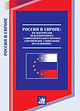
Results of first rounds of RSS are published in the book “Russia in Europe” (eds. A.V. Andreenkova, L.A. Belyaeva), Academia, 2009.
MORE >>
Results of the survey was highlighted in many articles in Russian press:
Results of the survey on rotating modules are described in several topline brochures produced by leading European experts in relevant fields and can be found in English or in Russian:
-
Брошюра «Личное и социальное благополучие в странах Европы» (авторы К. Джеффри, С. Абдалла, А. Квик)
Bibliography of academic publications based on RSS data is located on the website www.russiansocialsurvey.ru.(page PUBLICATIONS)
